

Written by Emma Sutton
No, that’s not a typo. After years of getting adoptive parenting spectacularly wrong, I discovered that the best way to parent my children is to lose. It took a lot of wrong turns, some epic meltdowns and the total loss of my dignity in the library toilets. But along the way, I’ve acquired a more therapeutic approach that has kept my family together, forged a strong connection with my children and helped us navigate some incredibly challenging times.
Maybe you’ve lost your shizzle a few times too and are wondering what else you might need to jettison just to keep things on an even keel. Here are the five things that I’d encourage you to lose, to help you become a more therapeutish parent.
Lose what you were taught
There isn’t just one way to be a parent (whatever parenting books might say). I learnt the hard way that the whole reward-and-consequences (carrots and sticks) approach did not suit my children. More than anything, they needed me to demonstrate unconditional acceptance and love for them so they could learn to trust me. That rarely happens with a threat (consequence) being dangled over their head.
What if your child is simply unable to complete the task or act a certain way? We can’t then impose a consequence for something they couldn’t do; that’s like punishing a pig for being pink.
My daughter has little impulse control. Do I punish her for stealing biscuits or do I design a system that suits her needs – by placing them out of reach – and ensuring that she’s set up to win (not lose)? Do I refuse to take them swimming because they’ve been distressed all morning and worn me out, or do I take them anyway and prove that having a good time at the pool isn’t contingent on having had an easy morning?
Lose what you think you’re seeing
Children can act in all sorts of ways, sometimes under conscious control (regulated) and sometimes when their threat systems are lighting up like Blackpool Illuminations (aka they’re dysregulated). But in the heat of the moment, it’s all too easy to respond to what we are seeing and experiencing (their behaviour), without ever asking what’s going on beneath the surface.
What we see is just one piece of the trauma puzzle, and it’s only when we step back and look at the bigger picture that we can understand what’s really going on.
My son was defiant. Stubborn. Refusing to come to town because ‘mummy was going.’ It was only when I carefully “wondered” what was different when I was there that he admitted he wanted more time and attention from his daddy. If I’d jumped on his behaviour, I’d never have discovered invaluable information about what he needed from us.
As parents we need to become detectives, picking up clues and piecing them together. What you might discover is that their underlying emotion is actually fear in disguise.
Lose the battle
You say “please”, they say “no” and before you know it, you’re playing the game of Escalation, convinced that as the grown-up, you can’t back down, because you have to be in charge, be on top. But you can only win if they lose and that’s a high price to pay. Not only that, but your relationship with them suffers along the way.
All ready to leave the house, my husband asked my son to get his hoody. Who refused. Game on. Our trip out looked doomed as each became increasingly entrenched in their need to win. In the end, a short biscuit reset calmed the soldiers down and we left the house intact. We’ve learnt that these battles never end well, so it’s best not to start them at all. We could have raced him to the hoody, made a game of it. Gone without it. All far better options than arguing the toss.
Our adopted children need us to be creative and surprising, looking for the win-win in every situation. Even if that means that sometimes we have to get his hoody for him.
Lose your knee-jerk response
They’ve pressed your buttons and you are just about to tell them exactly what you think of their goading, or sit-down protest. Knowing that their outward behaviour is not the full story gives you breathing space. Your job is not to react but to recognise what might be happening in their brain and body: their trauma, their fight/flight response. You’ve got one thing you have to do – regulate. Yourself. Wait, listen to music, have a cuppa, dance it out. You can respond, but only “when the iron is cold” as they say in NVR. Because trust me, the sort of “bashing your iPad with a coconut” threat you invent in the midst of a Tesco tantrum is not going to end well for either of you (or the iPad).
Lose what you think ought to be true
The ‘should’s. The ‘all children’ nonsense. The things that you hear at the school gate and on social media. Your child should go to school. Should be able to tidy their bedroom. Be on time. Wait patiently. Eat at the table. Sleep soundly. Should, but can’t. There are things that your child cannot do that many other children can. The distinction between won’t and can’t is enormous in adoptive parenting and it’s our job to know the difference.
Our children are unique. And our job as their parents is to understand them more deeply, with more connection, with eyes and brain wide open, so that we know when they flourish and when they falter.
Perhaps winning at parenting really does involve losing. Losing the rules, the stories, the battles, the reactions and the shoulds that get in the way, that stop us seeing the truth of our children. Because when we let go of those things that get in the way, we make room for curiosity, for connection, for creativity.
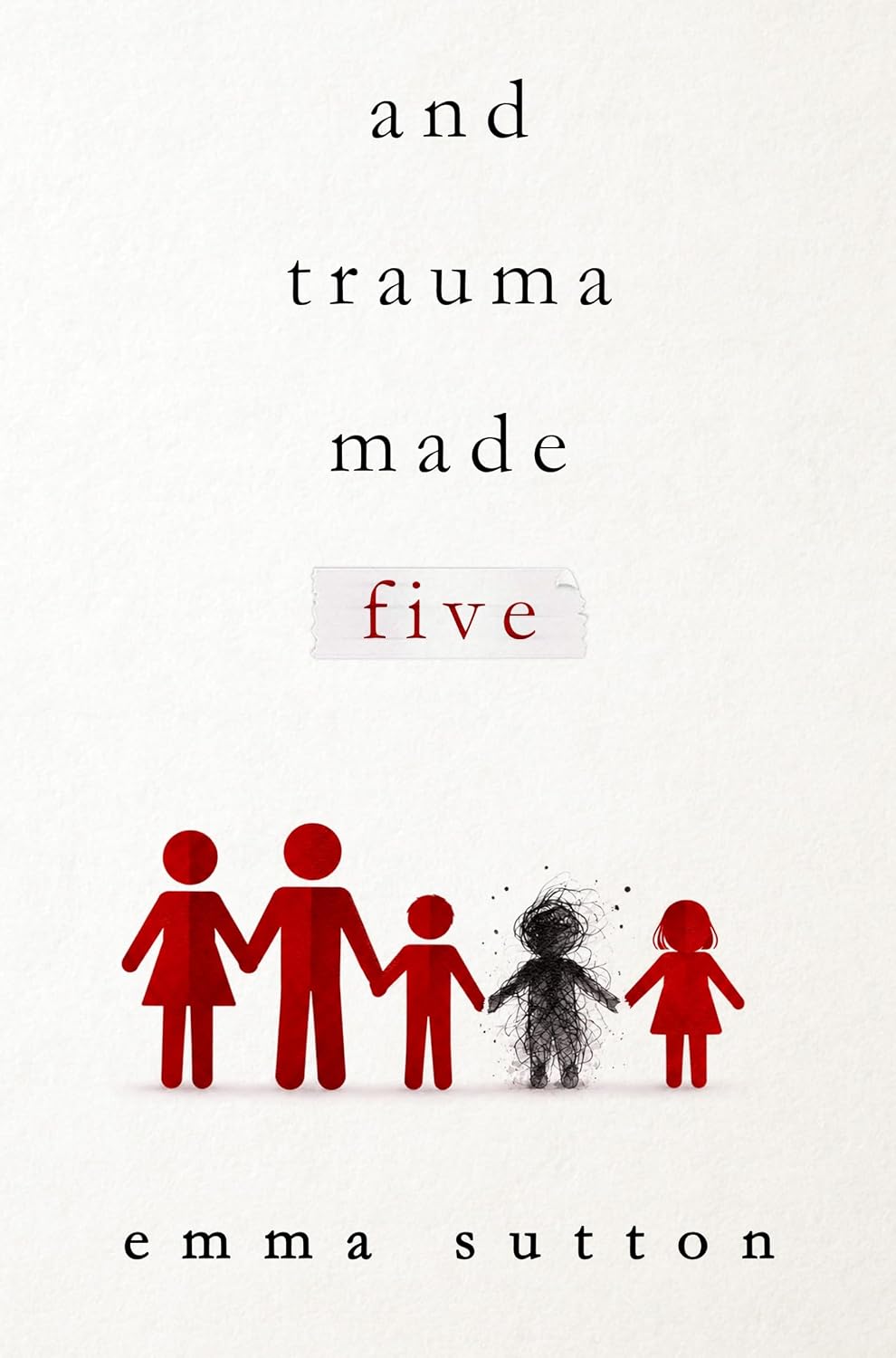
Emma Sutton is the author of And Trauma Made Five (the long-awaited sequel to And Then There Were Four). It explores what happens when the parenting you thought you knew no longer works, and your children need you to become a different kind of parent. And all the hurdles, hiccups and forkups on the way.
Head to the homepage to read the latest articles about adoption, parenting and wellbeing.

